
Looking for a quick booty workout that actually works? You’re in the right place.
This glute bridge workout is a 10-minute burnout that targets your glutes from every angle.
I do have a booty band with me, but it’s not totally necessary — you can do this entire workout without one.
Each exercise is 30 seconds long with short rest breaks in between. We’ll go through two rounds, so your glutes will definitely be feeling it by the end.
Ready? Let’s get to it!
Download this free printable Workout Tracker! Plus receive weekly workout tips when you subscribe.

Slow Glute Bridges

Let’s ease into this glute bridge workout with a slow, controlled version.
You’ll really feel that banded glute bridge resistance here — just make sure you’re pushing your knees out against the band the whole time.
If you don’t have a band, no worries. You can still activate glutes just as effectively by focusing on that mind-muscle connection.
How to perform:
- Make sure your weight is in your heels.
- Tuck your booty under and try not to arch your lower back.
- Push your knees outwards to feel the resistance (if using a band) and do not let them cave in.
- Slightly tap your bum to the floor.
- Send your hips right back up.
Glute Bridge with Abduction

For this one, you’ll add a knee-opening move at the top of your bridge.
Here’s the tricky part, though — you need to keep those hips pressed high while you do the abduction. Most people let their hips drop without realizing it!
Think of it as a two-for-one: you’re working your glutes AND outer thighs at the same time.
How to perform:
- Perform a glute bridge by pressing your hips to the ceiling.
- At the top of the bridge, open your knees to perform an abduction.
- Close your knees and lower your hips.
- Ensure you do not drop your hips during the abduction; keep them pressed to the ceiling the whole time.
Glute Bridge Abductions (Hold)

Now you’re holding that bridge position the entire time while opening and closing your knees.
This is where the burn really kicks in. Your glutes have nowhere to hide when there’s no rest between reps.
If you start to feel your hips sagging, that’s your cue to squeeze harder and press back up to the ceiling.
How to perform:
- Hold the top of the glute bridge with your hips pressed to the ceiling.
- Open your legs (abduction) and close them back up repeatedly.
- Maintain the hold and keep your hips pressed up throughout the movement.
Wide Glute Bridge

Time to step those feet out wider than your normal hip bridge workout position.
You’ll feel this one more in your hamstrings and outer booty.
The key here? Press your lower back into the floor every time you come down — no arching allowed.
How to perform:
- Step your feet out a little bit further than you would for a normal glute bridge.
- Sit into your heels.
- Press your hips all the way up super high to the ceiling.
- Press your lower back to the floor every time you come down and do not arch your lower back.
Wide Glute Bridge Pulse

Same wide stance, but now you’re adding glute bridge pulses.
You’ll drop halfway down and press right back up. These little pulses are sneaky — they look easy but they’ll have your under glute workout muscles screaming.
Keep those movements small and controlled.
How to perform:
- Maintain the wide foot position.
- Drop your hips down halfway.
- Press your hips right back up.
Narrow Glute Bridge
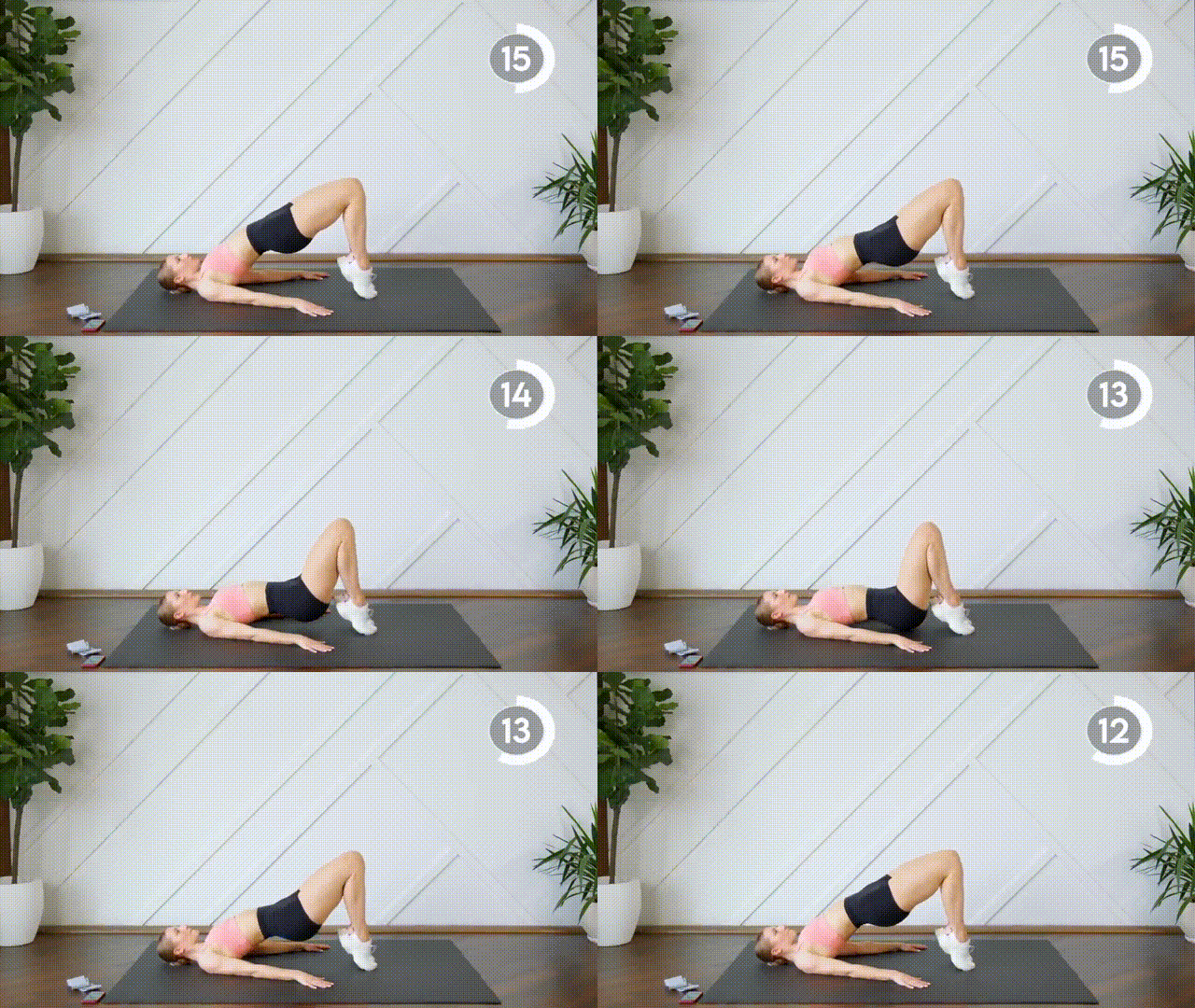
Bring those feet in close to your body — heels near your bum, legs together.
Want to make it harder? Try doing these on your tippy toes.
This variation shifts the focus slightly, so you might feel it in different spots than the wider stance. That’s exactly what we want from top glute exercises — hitting every angle.
How to perform:
- Step your feet in closer to you so your heels are close to your bum and your legs are closer together.
- Perform the glute bridge (you can optionally do these on your tippy toes).
Single Leg Glute Bridges

Here’s where things get real. The single leg glute bridge is one of the best ways to build balanced strength.
You can keep your non-working leg bent or stretched out — whatever feels most comfortable for you.
One important tip: if you’re feeling any lower back pain, really focus on tucking your booty under and pressing your lower back to the floor each time you come down.
How to perform:
- Choose a side to support your weight.
- Keep the non-working leg bent or stretched, whatever feels most comfortable.
- Tuck your booty under and press your lower back to the floor each time you come down to avoid pain.
- Press your hips all the way up.
Alternating Single Leg Glute Bridges

For the final move, you’ll switch legs with each rep — almost like a marching glute bridge workout but slower and more controlled.
The key is to shift your weight into your supporting leg BEFORE you send those hips up.
Press up, squeeze, hold for a second, then lower and switch. You’ve got this!
How to perform:
- Switch your weight into your supporting leg before you send your hips up.
- Press your hips up, squeeze, and hold.
- Lower your hips.
- Switch to the other leg and repeat.

Article Medically reviewed by
I’m fitness coach Ashley Castleberry, an NASM-certified personal trainer and nutritionist, as well as a coach on an established YouTube Channel with over 1 million followers. With certifications from major fitness brands, I specialize in athletic, HIIT, and strength training. Leveraging my experience coaching clients on lifestyle changes, I provide customized exercise and nutrition guidance to help people reach their fitness goals, whether that be weight loss, muscle gain or overall health improvement.