
Looking for a solid lower body calisthenics workout you can do at home? You’re in the right place.
This basic calisthenics leg workout is perfect for beginners—no gym membership or fancy equipment required. Just 25 minutes, your body weight, and you’re good to go.
Whether you’re exploring women’s calisthenics workout routines or just want to build stronger legs, this calisthenics leg workout has you covered.
Let’s get started!

Download this free printable Workout Tracker! Plus receive weekly workout tips when you subscribe.

Squat + Pulse

Let’s kick things off with a squat-pulse combo that keeps constant tension on your legs.
For this one, you’ll add small pulses at the bottom of your squat instead of standing all the way up (for more isolated muscle activation).
How to perform:
- Stand with feet shoulder-width apart, toes pointing forward.
- Bend your knees and lower your hips back and down, keeping chest upright.
- Lower until thighs are parallel to the floor or deeper.
- Once in the squat position, perform small pulses (quarter-depth movements) without standing all the way up.
- Return to standing position and repeat.
Squat Out + In Step

This exercise adds a side-stepping pattern to your basic squat. It targets your inner and outer thighs while keeping your lower body engaged the entire time.
How to perform:
- Stand with feet together or close together.
- Step one foot out to the side while simultaneously lowering into a squat position.
- Push back through your foot to return to the starting position.
- Repeat on the opposite leg, creating a side-stepping squat pattern.
- Keep your chest upright and core engaged throughout.
Squat Pulses

Here’s where you’ll really feel the burn in your quads and glutes. Instead of doing full squats, you’ll stay low and perform quick pulses—keeping constant tension on the muscles throughout.
How to perform:
- Stand with feet shoulder-width apart.
- Lower into a squat position until your thighs are parallel to the floor.
- Instead of standing all the way up, perform small up-and-down movements (pulses) while maintaining the squat position.
- These are small, controlled movements that keep constant tension on the legs.
Elevated Lunge Pulses

This exercise takes your standard lunge and adds pulsing movements at the bottom. The small controlled movements maximize muscle activation without the rest period of standing up.
How to perform:
- Step forward with one leg, lowering your body until the front knee is bent at approximately 90 degrees.
- The back knee should hover just above the ground.
- From this lunge position, perform small pulses by dipping slightly lower and pushing back up.
- Keep your torso upright and core tight.
- Complete all reps on one leg, then switch sides.
Lunge Hold

Your workout won’t be complete without some isometric holds. So, let’s test your muscular endurance with a static lunge position. Staying still is often harder than it looks!
How to perform:
- Step forward into a lunge position with one foot in front, one behind.
- Lower your hips until both knees are bent at approximately 90 degrees.
- Hold this position statically without movement for the duration of the set.
- Keep your weight evenly distributed and maintain an upright posture.
- Complete the hold on one side, then switch to the other leg.
Lunge Step Up

Now, add some elevation to your lunge routine. With one foot raised behind you, you’ll work through a deeper range of motion—which means your glutes and quads work even harder.
How to perform:
- Start standing with one foot elevated on a step or platform behind you.
- Lower your body down by bending both knees into a reverse lunge position, with your back knee moving toward the ground.
- Keep your front foot flat on the ground and your torso upright.
- Push through your front heel to return to the starting standing position.
- Repeat for the desired number of reps, then switch legs.
Wide + Close Step

This exercise blends two movements into one dynamic sequence. You’ll alternate between a wide reverse lunge and a close step-up pattern. It’ll take some coordination to get the rhythm down, though!
How to perform:
- Begin in a standing position with one foot on a step/block
- Step the opposite leg back and wide into a reverse lunge position, keeping the front foot elevated on the block
- Push through the elevated front foot to return to standing with that foot still on the block
- Immediately bring the back leg forward and up, stepping onto the block into a kneeling/half-kneeling position with the opposite knee down
- Return to the starting position with one foot on the block
- Repeat the sequence, alternating which leg does the stepping motion
Side Squat

Time to work laterally! This side-to-side squat movement hits your inner thighs and glutes from a totally different angle than regular squats.
How to perform:
- Stand with feet wide apart, approximately 1.5 times shoulder-width.
- Shift your weight to one side while bending that knee deeply.
- Keep the opposite leg straight.
- Your torso should remain upright as you lower into the side squat.
- Push through your bent leg to return to standing.
- Alternate sides in a flowing motion.
Side Squat Hold

Take that side squat position and hold it there. This isometric hold challenges your inner thighs and tests your muscular endurance.
If you struggle with balance, keep your chest up and use your hands for support.
How to perform:
- Stand with feet wide apart in a wide stance position.
- Shift your weight to one side and bend that knee, lowering your hips.
- Hold this position statically for the entire duration without movement.
- Keep your chest up and hands positioned for balance.
- Complete the hold on one side, then switch to the other.
Curtsy Lunge + Squat

This combo brings together two classic lower body moves. You’ll flow from a curtsy lunge straight into a regular squat, keeping your muscles guessing with the changing positions.
How to perform:
- Start standing with feet together.
- Step one leg behind and across your body into a curtsy position, bending both knees.
- Your front leg should be slightly bent while the back leg crosses behind.
- Return to standing.
- Immediately perform a regular squat with feet shoulder-width apart.
- This creates a combination of the curtsy lunge followed by a full squat.
Curtsy Pulses

Curtsy pulses can be tweaked as much as needed. Experienced with lower body calisthenics? Hold the curtsy position lower for extra intensity.
Beginners, however, could start with a higher position until you build strength.
How to perform:
- Position yourself in a curtsy lunge stance with one leg crossed behind your body.
- Perform small pulsing movements, dipping slightly lower and pushing back up.
- Keep constant tension on the muscles throughout the pulses.
- All pulses are performed on one leg before switching sides.
Heels Elevated Squats

This exercise adds a simple twist to regular squats—you’ll rise onto the balls of your feet. This shifts more work to your quads and adds a serious calf challenge at the same time.
How to perform:
- Stand with feet shoulder-width apart.
- Lift your heels off the ground, rising onto the balls of your feet.
- While keeping your heels elevated, perform full squats by bending your knees.
- Lower until thighs are parallel to the floor, maintaining the heel elevation.
- Push through the balls of your feet to return to standing.
- This increases quad activation and calf engagement.
Heels Elevated Hold

Next, combine that heel elevation with an isometric hold. To nail your form, you’ll keep your chest upright and core engaged. Your calves and quads will be working overtime to keep you stable!
How to perform:
- Rise onto the balls of your feet with heels lifted.
- Lower into a squat position while maintaining the heel elevation.
- Hold this position statically without any movement.
- Keep your chest upright and core engaged.
- The elevated heels increase the difficulty and intensity of the hold.
Reverse Lunges

Do you struggle with forward lunges because they bother your knees? This variation is for you. Stepping backward takes pressure off your knee joints while still hitting all the same muscles.
How to perform:
- Stand upright with feet together.
- Step backward with one leg, lowering your body until your back knee nearly touches the ground.
- Your front knee should be bent at approximately 90 degrees.
- Push through your front heel to return to starting position.
- Alternate legs in a steady, controlled manner.
- Keep your torso upright throughout the movement.
Shrimp Squat
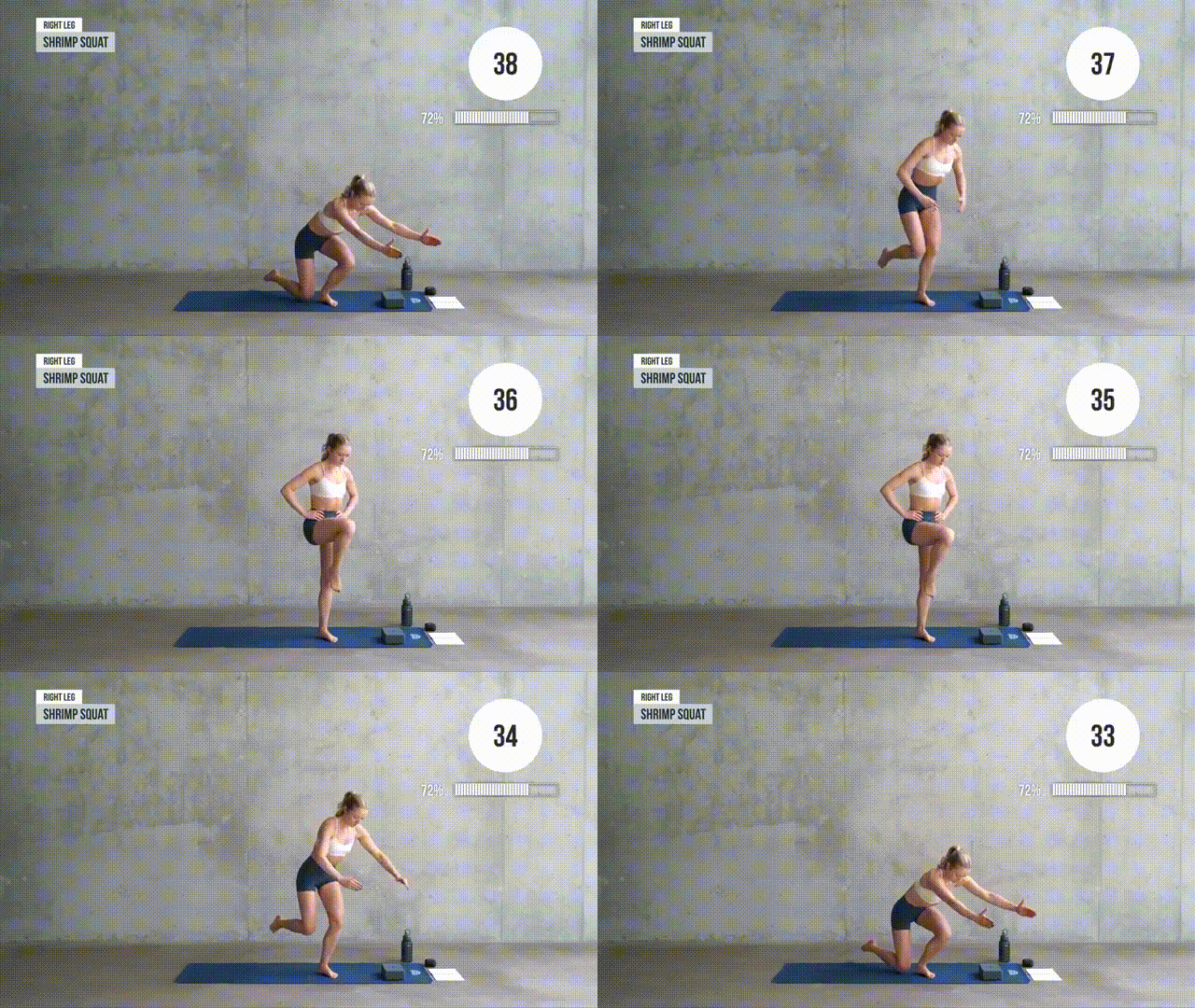
This single-leg squat variation looks intimidating, but take it slow and you’ll get there. It’s one of the best bodyweight exercises for building serious leg strength and balance.
How to perform:
- Stand on your right leg with your left leg bent behind you.
- Place both hands on your hips.
- Lower your body by bending your right knee.
- Extend both arms forward for balance as you descend.
- Continue until your left knee touches or comes close to the mat.
- Drive through your right heel to return to standing.
Squat + Heel Raise

For this exercise, you’ll combine a squat with a calf raise. This efficient combo hits your entire lower body—from quads to calves—in one movement.
How to perform:
- Start standing with feet shoulder-width apart, hands in front of chest.
- Lower into a squat by bending knees and pushing hips back.
- While in the squat, rise onto the balls of your feet.
- Lower heels back down while staying in the squat.
- Stand back up to complete one repetition.
Heel Raise Hold

This exercise adds a bit of elevation to your static squat hold—you’ll stay on your toes the entire time. And to take things to the next level, maintain the squat position without dropping your heels!
How to perform:
- Perform a full squat by bending your knees and lowering your hips.
- Rise onto the balls of your feet, elevating your heels off the ground.
- Hold this elevated position statically without any movement.
- Keep your body upright and core engaged.
- Maintain the position for the entire duration of the set.
- This targets the calf muscles intensely.
Wall Sit

The classic wall sit never gets old. This isometric hold builds serious muscular endurance in your quads without any movement or fancy equipment.
How to perform:
- Lean your back against a wall.
- Walk your feet out in front of you while sliding your back down the wall.
- Lower until your knees are bent at approximately 90 degrees.
- Your thighs should be parallel to the ground.
- Hold this isometric position without moving.
- Keep your back flat against the wall throughout the hold.
Squat Jumps

You’re almost there! For the last exercise, you’ll add explosive power to your basic squat. This plyometric movement builds both strength and athleticism, so give it everything you’ve got!
How to perform:
- Stand with feet shoulder-width apart.
- Lower into a squat position by bending your knees and hips.
- Explosively jump upward, extending your legs fully.
- Land softly with bent knees, immediately lowering back into the squat position.
- This combines jumping with squatting for a plyometric exercise.
Article Medically reviewed by
I’m fitness coach Ashley Castleberry, an NASM-certified personal trainer and nutritionist, as well as a coach on an established YouTube Channel with over 1 million followers. With certifications from major fitness brands, I specialize in athletic, HIIT, and strength training. Leveraging my experience coaching clients on lifestyle changes, I provide customized exercise and nutrition guidance to help people reach their fitness goals, whether that be weight loss, muscle gain or overall health improvement.