If you’ve done squats for months and your butt still looks flat on top, or one side looks bigger than the other, effort probably isn’t the problem.
Each upper vs lower glute exercise favors a different part of the same muscle, and most routines only train one kind.
In an EMG study, clamshells worked the top of the glute about three times harder than the bottom.
So if you want a round, lifted look and a stronger lower body, training your glutes effectively means doing both.
Below are 10 exercises that target the upper glutes, 6 for the lower glutes, and home and gym workouts that put them together.

Upper Glutes vs Lower Glutes: What’s the Difference?

Meet Your Glute Muscles
Your glutes are three gluteal muscles:
- Gluteus maximus: the largest, and the main muscle behind hip extension (straightening up from a bend).
- Gluteus medius: sits on the upper outer side of your butt and moves your leg out to the side.
- Gluteus minimus: the smallest, tucked underneath the medius.
The gluteus medius plays a big role in hip stability and has a role in supporting your pelvis every time you stand on one foot.
That means it has to stabilize you through every lunge and step-up.
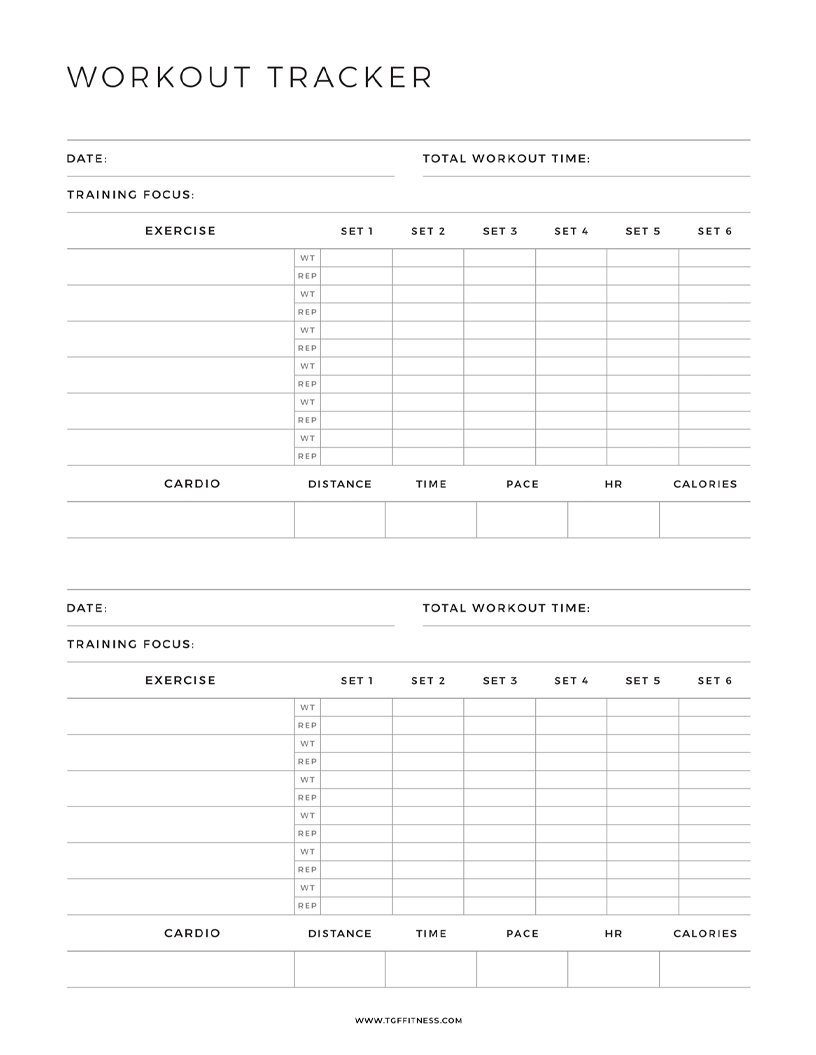
Download this free printable Workout Tracker! Plus receive weekly workout guides when you subscribe.
There’s No Line, Just Fibers That Do Different Jobs
“Upper glutes” usually means the top section of the glute max plus the gluteus medius.
“Lower glutes” means the bottom section of the glute max, where it meets the back of your thigh.
There’s no seam between those areas, but the fibers don’t all pull in the same direction.
The upper fibers help extend the hip and also move the leg out to the side (abduction) and rotate it outward. The lower fibers mostly handle hip extension.
Fitness coaches boil that down to a simple rule:
- Upper glutes are the “squeezers.” They respond to exercises where your glute has to contract hardest at the top of the rep, like hip thrusts and bridges, and to side movements.
- Lower glutes are the “stretchers.” They respond to exercises that load your glute in a deep stretch, like Romanian deadlifts, squats and lunges.
What the Research Actually Shows

A systematic review by the Brookbush Institute pulls the studies together, and they only partly support the coaches’ rule.
You can target the top. In a fine-wire EMG study, clamshells worked the top of the glute max about three times harder than the bottom (43.6% vs 14.3% of maximum effort), and side-lying leg raises and side steps showed the same pattern.
You can’t single out the bottom, though. No exercise consistently worked it harder than the top, and bridges, lunges and hip thrusts worked both about equally.

The growth studies fit that picture. Over 9 weeks, hip thrusts and back squats grew all three regions of the glute by similar amounts.
In a 10-week cable study, hip abduction grew the top of the glute by about 10% and barely changed the bottom, while cable hip extension grew the bottom by about 14% and built more total muscle.
The “shelf” at the top of the butt, the part most people care about for aesthetics, comes mostly from the upper glute max and the gluteus medius.
That’s why a squat-only routine can leave the top of your glutes flat while your legs get stronger.
Upper glutes are the squeezers. Lower glutes are the stretchers. Train both, and you train your whole butt.

10 Exercises That Target the Upper Glutes (the “Squeezers”)
These are exercises that emphasize the top of the rep or move your leg out to the side.
Whatever the movement, focus on squeezing your glutes at the top and hold the squeeze for a beat before you come back down.
Glute Bridge with Pulses
You’ve probably done a glute bridge before, but adding pulses at the end makes this one a real squeezer.
Since they keep you hovering near the top, your glutes never get a break.
So if it starts to burn, that’s a good sign.
How to perform:
- Lie on your back with your knees bent and feet flat, about hip-width apart.
- Tuck your pelvis so your lower back presses into the floor.
- Push through your heels and lift, squeezing your glutes at the top.
- After your last rep, pulse for 30 seconds: drop halfway and press back up without resting.
- Do 3 sets of 15 reps plus the pulses.
Classic Glute Bridge
This is the move the other bridges build on, so it’s worth getting right.
Tucking your lower back first keeps the work in your glutes.
Once bodyweight feels easy, just rest a dumbbell or barbell across your hips.
How to perform:
- Lie on your back with your knees bent and your feet planted flat on the floor.
- Tuck your lower back and press it down into the floor.
- Send your hips up as high as you can, until your knees reach about a 90-degree angle.
- Hold the top position for a second and squeeze your glutes.
- Come back down with control. If you added a dumbbell, keep holding the weight steady on your hips.
- Do 3 sets of 15 reps.
Frog Glute Bridge
Frog legs might look a little silly, but they change where you feel this bridge.
That’s because they rotate your hips outward, which is one of your upper glutes’ jobs.
So don’t be surprised if you feel this one higher up than a regular bridge.
How to perform:
- Lie on your back, press the soles of your feet together, and let your knees fall open.
- Press your back flat into the floor.
- Push through the outer edges of your feet and lift as high as you can.
- Squeeze at the top, then come down slowly.
- Finish with 30 seconds of half-range pulses.
- Do 3 sets of 15 to 20 reps.
Single-Leg Glute Bridge with Hold
Now each glute works on its own, so a weaker side has nowhere to hide.
Then the final hold keeps you at the top, right where you want the squeeze.
And your legs might shake a bit by the end, but that’s totally normal!
How to perform:
- Lie on your back with one leg lifted, bent or straight, and the other foot flat.
- Plant your heel and push through it to lift up.
- Keep your hips level so they don’t drop toward the lifted leg.
- Hold the last rep at the top for 10 seconds, then switch sides.
- Do 3 sets of 10 reps per leg.
Side-Lying Clamshell
Clamshells look almost too easy, but they stood out in the EMG research.
In fact, no other exercise tested leaned this hard toward your upper glutes.
Plus, they’re great for targeting your gluteus medius, which you’ll feel on the side of your hip.
How to perform:
- Lie on your side with your legs bent and your hips stacked.
- Keep your feet together and open your top knee as far as you can without rolling backward.
- Squeeze the outside of your glute at the top, then close slowly.
- Add a mini band above your knees once bodyweight gets easy.
- Do 2 to 3 sets of 15 to 20 reps per side.
Fire Hydrant with Half Circles
This move is a two-for-one, since each half circle works your glute in two directions.
So you basically get a fire hydrant and a donkey kick in every rep.
Smoothing it out takes some practice, though, so take your time.
How to perform:
- Start on all fours with your wrists under your shoulders.
- Keep your core engaged and lift one knee out to the side without leaning the other way.
- Pause and squeeze at the top, then bring it back down.
- For half circles, lift to the side, sweep back into a donkey kick, then return.
- Do 30 seconds of half circles, then 30 seconds of regular fire hydrants, on each side.
Donkey Kick with Pulses
Every donkey kick ends with your glute fully squeezed, so it fits right in with the other squeezers.
And the pulses keep the tension right there at the top instead of letting you relax.
They’re tiny movements, but they sneak up on you fast!
How to perform:
- Start on all fours with both hips facing the floor.
- Engage your core and drive one heel toward the ceiling, keeping your leg bent at 90 degrees.
- Squeeze at the top without arching your back, then return.
- After your last rep, hold at the top and pulse for 30 seconds.
- Do 2 to 3 sets of 15 reps per side.
Straight Fire Hydrant
Once you’ve tried the half circles, this one lets you focus on just the lift.
It’s a simple lateral leg raise that works the side of your upper glutes.
So really squeeze and hold at the top instead of rushing the movement.
How to perform:
- Start on all fours in a tabletop position.
- Keep your upper body still and your core tight.
- Lift one knee out to the side as high as you can.
- Squeeze and hold at the top for a beat, then bring it back down.
- Do 2 to 3 sets of 15 reps per side.
Classic Donkey Kick
Think of this as your kickback, with no cable machine needed.
Driving your heel toward the ceiling gives your glute a strong squeeze at the top.
Just keep both hips facing the floor, since it’s easy to let one open up.
How to perform:
- Start on all fours in a tabletop position.
- Make sure both hips face the floor the whole time.
- Engage your core and kick your heel as high as you can toward the ceiling.
- Squeeze your glute at the top, then bring your knee back down.
- Do 3 sets of 15 reps per side.
Donkey Kick Extension
This is a donkey kick with a little something extra at the end.
Straightening your leg at the top keeps your glute working and brings in your hamstring, too.
So if you feel it down the back of your leg, you’re on the right track!
How to perform:
- Start on all fours and kick one heel up into a donkey kick.
- Keep your knee right where it is at the top.
- Extend the lower half of your leg, then bend it back in.
- Bring your knee back down with control and repeat.
- Do 3 sets of 12 reps per side.
6 Exercises for the Lower Glutes (the “Stretchers”)
These load your glutes in the bottom position, where they’re stretched.
No exercise can isolate the lower glutes, but these give the bottom of the muscle a deep stretch while they build strength through your whole glute and thigh.
Most are compound movements, so your quads and hamstrings work too.
Double-Pulse Squat
Now for the stretchers! Two little pulses at the bottom turn a basic move into a real challenge.
Since you stay low, they keep constant tension on your glutes while they’re stretched.
Your legs might start to shake, but that just means it’s working!
How to perform:
- Stand with your feet about shoulder-width apart, or a little wider.
- Sink all the way down, taking your time on the way (the eccentric).
- Pulse twice at the bottom, then stand back up.
- Keep a slight bend in your knees at the top so the tension stays on your glutes.
- Keep your torso angled slightly forward and avoid rounding your back.
- Do 3 sets of 15 reps.
Good Morning to Squat
This combo needs zero equipment, so you can do it pretty much anywhere.
First, the good morning works like a weight-free deadlift, and then the squat piles on a second stretch.
Your hamstrings will definitely let you know they’re working, too!
How to perform:
- Stand with your feet hip-width apart and pointing forward, fingertips by your ears.
- Hinge forward with a flat back and your chin tucked, as far as your hamstrings allow.
- Stand up and squeeze your glutes.
- Bend your knees into a squat, then stand again.
- Do 3 sets of 12 reps.
Sumo Squat
Going sumo is a simple way to get more glute and inner thigh work out of your squat.
Once bodyweight feels easy, just hold a dumbbell at your chest to level it up.
Or, if you’re at the gym, give sumo deadlifts a try instead.
How to perform:
- Stand with your feet wider than shoulder-width and your toes pointed out on a diagonal.
- Keep your chest up and sit straight down until your thighs are about parallel to the floor.
- Push your knees out in line with your feet.
- Drive through your heels and squeeze your glutes together as you stand.
- Do 3 sets of 12 to 15 reps.
Reverse Lunge with Knee Drive
Why step back instead of forward? Because it keeps your weight over your front heel.
That shifts more of the work onto your glute and less onto your quad.
Plus, the knee drive throws in a balance challenge, which takes a little getting used to!
How to perform:
- Stand tall and step one leg back into a lunge.
- Sit into your front heel until your front thigh is about parallel to the floor.
- Push through your front foot to stand, driving your back knee up toward your chest.
- If balancing is too hard, tap your back toe down next to your front foot instead.
- Do 3 sets of 10 reps per leg.
Jump Squat
Ready to finish strong? Jump squats add some power to all that stretching.
You’ll sink down low, then drive through your feet and explode up.
And if you can’t jump anymore, fast squats will still do the job.
How to perform:
- Stand with your feet about shoulder-width apart.
- Sit your hips down and back, keeping your chest up.
- Drive through your feet and jump as high as you can.
- Land softly and sink right into your next rep.
- Too tired to jump? Switch to fast, explosive squats instead.
- Do as many as you can in 30 seconds, for 2 to 3 sets.
Side-Lying Diagonal Kickback
When we say “lower glutes,” we usually mean the underside of the butt.
And a lot of people feel this diagonal kick right in that spot.
So if that’s the area you’re after, this one’s well worth a try!
How to perform:
- Lie on your side with your bottom leg bent for support.
- Flex the foot of your top leg.
- Kick the leg back on a diagonal and reach it as long as you can.
- Keep your upper body still and squeeze your glute at the end of each kick.
- Do 2 sets of 15 reps per side.
How to Even Out Uneven Glutes
If one glute is bigger or stronger than the other, skip the extra reps on the smaller side and incorporate more unilateral exercises instead.
Training one leg at a time stops your stronger side from taking over, which is usually enough to even things out.
The single-leg glute bridge, reverse lunge and weighted step-ups all work. Start each set with your weaker side and match the reps on the other.
These two moves help too.
Bulgarian Split Squat
Fair warning, Bulgarian split squats are tough, but they’re tough for a good reason.
With your back foot up, your front leg does most of the work through a big range of motion.
And finding the right stance takes a minute, but it’s worth it.
How to perform:
- Rest the top of your back foot on a bench behind you.
- Sit down and back, reach your front foot out as far as it will go, and plant it. That sets your stance.
- Stand up, grab your weights, and stand tall with your core tight and shoulders back.
- Squat down using mostly your front leg, then press through your front heel to stand.
- Do 3 sets of 8 to 12 reps per leg, then switch sides.
B-Stance RDL
Want single-leg work without all the wobble? This RDL gives you the best of both worlds.
Since your back foot is only there for balance, your working leg still does the heavy lifting.
That’s why it’s a favorite for uneven glutes.
How to perform:
- Hold a dumbbell in each hand.
- Shift most of your weight onto your working leg and set the other foot back like a kickstand, on the ball of your foot.
- Hinge by pushing your hips back until you feel a stretch in the back of your hamstrings. Think about moving your hips, rather than lowering your upper body.
- Keep a neutral spine, in a straight line from your head to your tailbone.
- Bring your hips forward to stand and squeeze your glutes at the top.
- Do 3 sets of 10 reps per side.
Upper and Lower Glute Workouts You Can Follow

20-Minute At-Home Glute Workout (No Equipment)
All you need is a mat, and it works at any fitness level.
Do each exercise for 30 seconds, then rest for 15. The bridges come first to activate your glutes.
Block 1: Bridges
- Glute bridge, then pulses
- Frog bridge, then pulses
- One-leg bridge with a 10-second hold (each side)
Block 2: Side-lying (each side)
- Clamshells, then diagonal kickbacks
Block 3: All fours (each side)
- Donkey kicks, then kick-and-extend (straighten the leg at the top of each kick), then pulses
- Fire hydrant half circles, then regular fire hydrants
Block 4: Standing
- Double-pulse squats (pulse twice at the bottom)
- Reverse lunge with knee drive (each side)
- Sumo squats, then good morning to squat
Finisher
- 30 seconds of jump squats
Gym Glute Workout: Upper and Lower in One Session

Do the compound lifts first while you’re fresh and the isolation moves last.
- Hip thrust: 3 to 4 sets of 8 to 12 reps
- Dumbbell Romanian deadlift: 3 sets of 8 to 10 reps
- Reverse lunges or weighted step-ups: 3 sets of 10 reps per leg
- Standing cable abduction: 3 sets of 12 to 15 reps per side
- Finisher: clamshells or band walks, 2 sets of 15 to 20 reps
Rest 60 to 120 seconds between sets on the first three and 30 to 60 seconds on the last two.
How Often to Train Your Glutes (and Keep Progressing)

Aim for glute training two to three times per week, with a rest day between sessions.
For example, do the gym workout on Monday, the home workout on Wednesday, and the gym workout again on Friday.
To keep progressing, add weight or reps once the top of your rep range feels easy, slow down your tempo on the way down, and end most sets with one to three reps left in the tank.
Sleep and nutrition, especially enough protein, matter as much as the training, since your glutes grow while you recover.
Common mistakes to avoid:
- Arching your lower back at the top of a bridge or hip thrust
- Letting your legs cave inward on squats and lunges
- Losing your posture on lunges
- Swinging your leg on kickbacks
- Forgetting to keep your core engaged throughout the movement
Train the Squeezers and the Stretchers
Your upper and lower glutes have no dividing line, but there are two kinds of exercise and you need both.
Squeezers and side moves build the top and the shelf. Stretchers build the bottom and add size everywhere.
Whether your goal is aesthetic or about performance, a training routine with both gives you overall glute strength and a fuller shape.
Start with the 20-minute home workout this week, then add the gym session when you’re ready for more weight.
FAQs
Which glute gives you a top shelf?
Mostly the upper part of the gluteus maximus and the gluteus medius, which sits above and to the side of it.
Build it with squeeze-at-the-top exercises like hip thrusts and side moves like clamshells and band walks.
Body fat and genetics play a part too, so results vary.
In what order should glute workouts be done?
Start with a few light bridges or band exercises to activate your glutes.
Do your heaviest lifts next, like hip thrusts and RDLs, while you’re fresh.
Then do exercises that work one side at a time, and finish with lighter moves like clamshells.
What is the 8 8 8 rule for glutes?
It’s one hip thrust set done in three parts: 8 full reps, 8 partial reps at the top, then an 8-second hold.
It packs a lot of work into one set, so people use it to end a glute session.
No study shows it beats regular sets, so treat it as a finisher.
Article Medically reviewed by
I’m fitness coach Ashley Castleberry, an NASM-certified personal trainer and nutritionist, as well as a coach on an established YouTube Channel with over 1 million followers. With certifications from major fitness brands, I specialize in athletic, HIIT, and strength training. Leveraging my experience coaching clients on lifestyle changes, I provide customized exercise and nutrition guidance to help people reach their fitness goals, whether that be weight loss, muscle gain or overall health improvement.